
Why Overstretching your fingers might be causing Piano Pain

If you play piano and feel like your reach isn’t big enough, it’s easy to assume you just need to stretch more.
So a lot of pianists start pulling their fingers side to side to try to increase span.
I see this all the time.
The issue is that the ligaments on either side of your finger joints (collateral ligaments) are stabilizers. Their job is to keep the joint steady when you press into keys. They’re not really meant to be repeatedly stretched sideways.
When you do that often, especially with octave work, those ligaments can get irritated.
That’s usually when people start feeling pain along the side of a finger joint.
It’s common. And it doesn’t mean you did something wrong. But it does mean the strategy might need to change.
We can improve reach without stressing the joint itself.
Let’s talk about how.
The Pressure to “Have Big Hands”
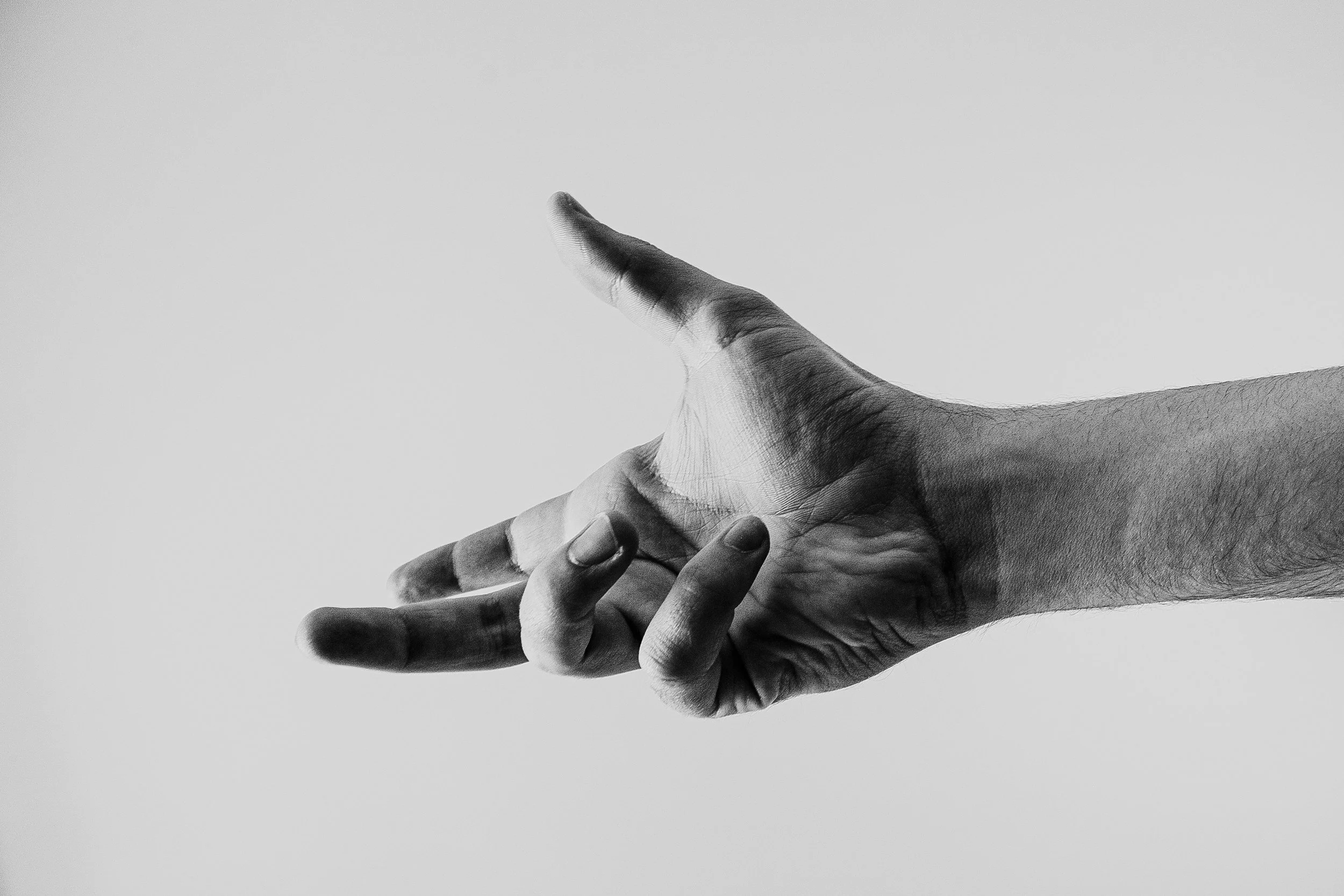
There’s an unspoken assumption in the piano world that a bigger hand span makes things easier.
Wider reach feels like an advantage.
Octaves feel less demanding.
Large chords feel more accessible.
So if you don’t naturally have that span, it’s easy to assume you need to create it.
I see this especially in pianists who are disciplined and motivated - they start stretching their fingers side to side to try to increase reach.
On paper, that seems logical.
But fingers aren’t designed like larger muscle groups in your legs. You can’t treat them like hamstrings and expect the same adaptation.
And that’s usually where the irritation begins.
The Anatomy You Were Never Taught
Your fingers are held together by collateral ligaments - strong bands of tissue that connect bone to bone on the sides of each joint.
These ligaments:
Prevent your fingers from bending too far sideways
Stabilize the joint during forceful playing
Protect the cartilage inside the joint
They are designed for stability - not aggressive mobility.
When you repeatedly stretch your fingers side to side (especially to force octaves), you are loading those ligaments in a direction they are not built to handle chronically.
Unlike muscles, ligaments:
Have poor blood supply
Heal slowly
Do not respond well to repetitive strain
Over time, this can lead to:
Pain on the side of the finger joint
Swelling
Clicking
A feeling of instability
Chronic irritation
The Type of Pain That Should Get Your Attention
If you’re feeling:
Pain on the outside of your index finger
Tenderness along the side of your middle or ring finger
Sharp discomfort when spreading fingers apart
Pain when playing octaves or wide chords
That’s often a ligament talking - not a “tight muscle.”
And if you continue stretching into it?
It can become chronic.
I’ve treated pianists who thought they were “just tight”- but what they actually had was a collateral ligament injury that had been irritated for months.
The longer it goes on, the more sensitive the joint becomes.
A Real Clinical Pattern I See
I once treated a pianist who developed pain on the side of her index finger after increasing her octave practice.
She assumed:
“I just need to stretch more.”
Instead, she was quietly aggravating her collateral ligament every single day.
Once we reduced side-to-side stretching and focused on stabilization instead, her pain began to calm down within weeks.
The key wasn’t more mobility.
It was controlled strength and protection.
Why Stretching Feels Logical (But Isn’t Always)
When your hamstrings feel tight, you stretch them.
When your hips feel stiff, you mobilize them.
So when your fingers feel restricted, stretching seems like the answer.
Your hamstrings are large muscle groups designed for flexibility.
Your fingers are delicate structures made for precision.
If your leg muscles are like ropes, Your finger muscles are like threads.
You will never get the same intense “stretch” sensation in your fingers — and trying to force that sensation can cause injury.
If You’re Already Feeling Pain — Here Are 3 Steps That Can Help
If you’ve started to notice pain on the sides of your finger joints, here are three evidence-based strategies I often use in clinic.
1. Buddy Taping: Give the Ligament a Break
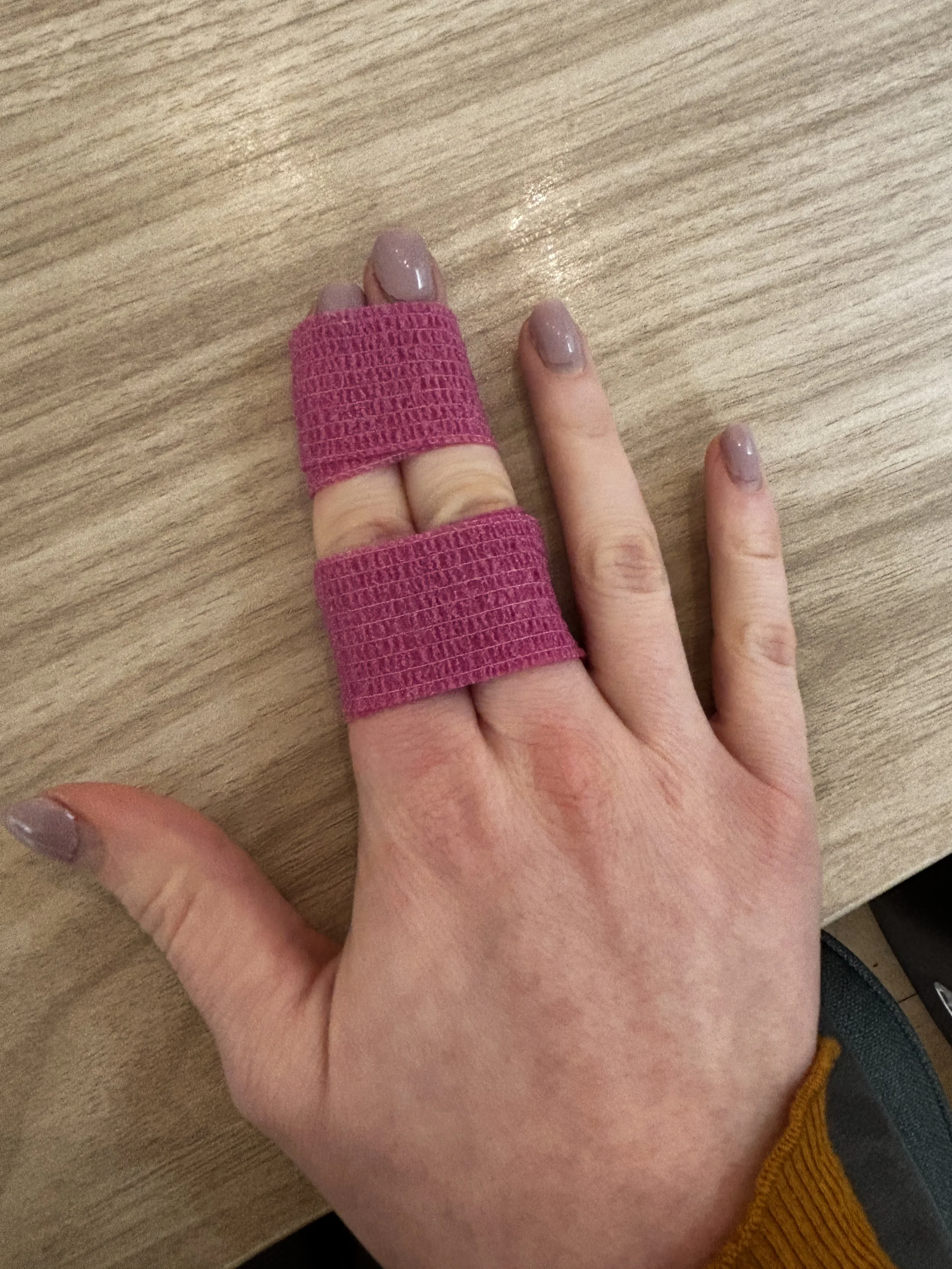
Buddy Taping with Coban Wrap
Buddy taping is one of the simplest and most effective ways to calm a collateral ligament injury.
It works by:
Reducing side-to-side strain
Allowing micro-tears in the ligament to heal
Improving joint stability during activity
How to Do It:
Place the painful finger next to its neighbor.
Use cohesive wrap (Coban) to gently secure:
One strip above the joint
One strip below the joint
Keep it snug but not tight enough to restrict circulation.
Wear it during activity or even continuously for several days (up to 1–2 weeks depending on severity).
If you have pain on the outside of your index finger or your thumb, you may require a custom splint from a certified hand therapist.
2. Intrinsic Strengthening: Protect From the Inside
Your fingers are controlled by two muscle systems:
Extrinsic muscles
These come from your forearm and power big movements.
Intrinsic muscles
These are inside your hand and control fine motor stability - including sideways control (abduction and adduction).
The intrinsic muscles are your joint protectors.
If they’re weak, your ligaments take more stress.
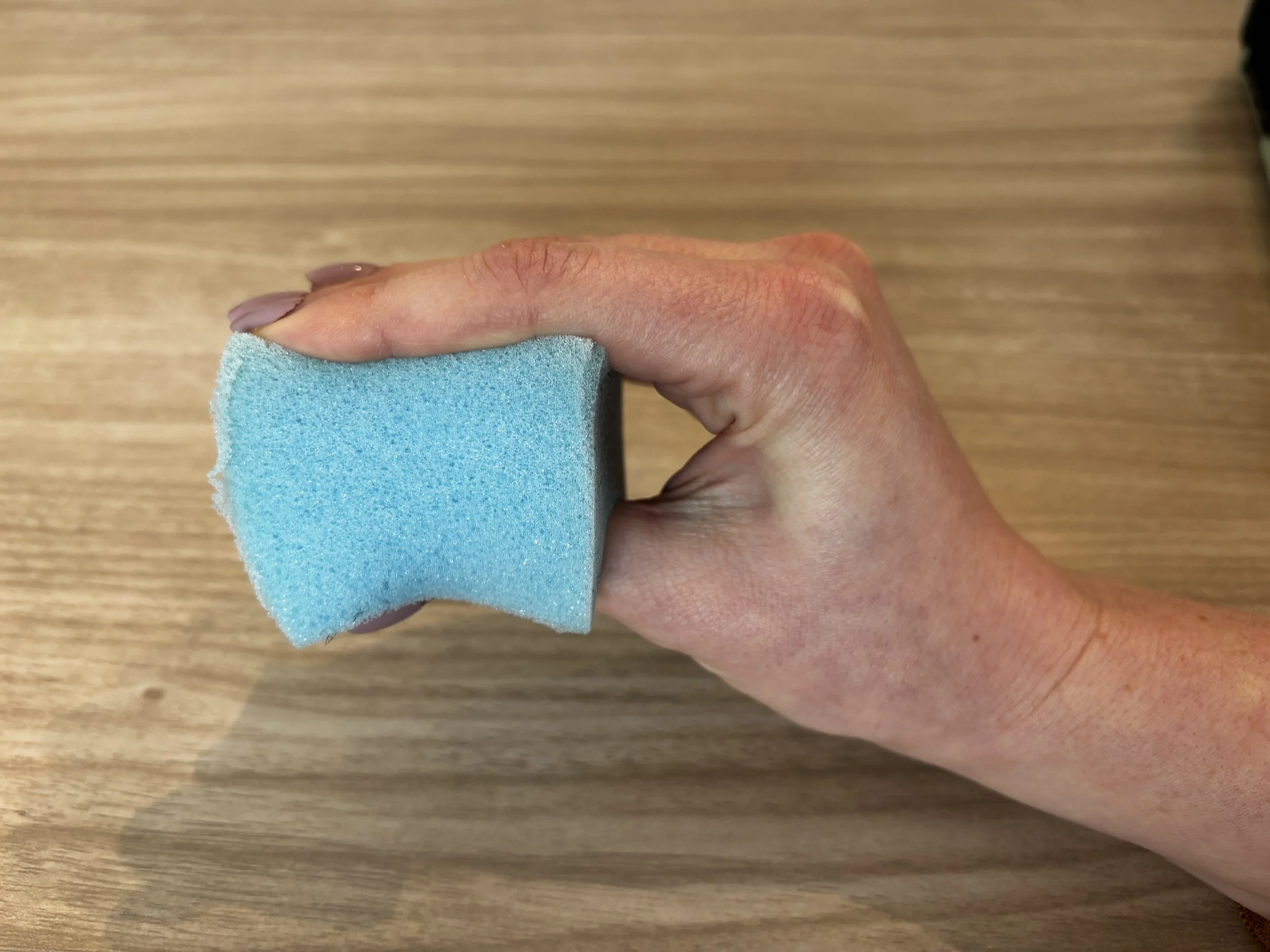
One of my favorite intrinsic exercises for pianists is lumbrical strengthening.
Lumbrical Towel Exercise
Hold a small towel.
Make your hand look like a sock puppet:
Fingers straight
Knuckles bent
Squeeze the towel for 5 seconds.
Relax.
Repeat 20 times per day.
This strengthens the internal stabilizers that protect you from sideways overload.
Over time, stronger intrinsic muscles reduce strain on your ligaments.
3. Gentle Stretching - With New Rules
Stretching is very important, but the intensity must change.
When stretching fingers side to side:
Stop at 2–3/10 intensity.
Avoid pushing into discomfort.
Do not bounce or force.
Hold gently for 10–15 seconds.
You are not trying to “increase span dramatically.”
You are maintaining mobility safely.
Remember:
You don’t need extreme mobility to be a good pianist.
You need controlled mobility.
The Bigger Issue: Performance Pressure
Many pianists push through early warning signs because:
They have recitals coming up.
They’re afraid to fall behind.
They believe pain is weakness.
They’ve been told stretching is always beneficial.
But pain is information.
Your body is not trying to sabotage your playing.
It’s trying to protect you.
Ignoring ligament pain rarely makes it disappear.
Addressing it early prevents long-term damage.
When It’s Not Just a Ligament
Not all piano pain is ligament-based.
Sometimes nerve irritation, tendon overload, or joint inflammation can mimic similar symptoms.
That’s why individualized assessment matters.
Self-diagnosing as “tight” can delay proper recovery.
Frequently Asked Questions
Can you play piano with a collateral ligament injury?
Yes - often with modifications like buddy taping and reduced span demands temporarily. But pushing through pain without protection can prolong recovery.
How long does a finger ligament take to heal?
Mild sprains may calm down in 2–4 weeks. More irritated ligaments can take several months if not properly protected.
Should pianists stretch their fingers at all?
Yes - gently. The goal is maintenance, not forcing anatomical changes.
The Takeaway
If you’re stretching aggressively to improve your octave reach…
And you’re developing pain along the sides of your fingers…
Your ligaments may be asking for stability, not more mobility.
Sometimes the key to better piano performance isn’t opening your hands wider.
It’s strengthening what protects them.
If you’re unsure whether your pain is ligament, nerve, or something else entirely, working with a hand therapist who understands musicians can make all the difference.
